
Interviews
Interview with Simona Aebersold
Periodically we publish an interview with an interesting sports personality. Today with Simona Aebersold, multiple Junior Orienteering World Champion.

The importance of muscle strength with regards to running performance is frequently underestimated – despite the fact that there are now several studies which have clearly demonstrated the positive effects of strength training.
The importance of muscle strength with regards to running performance as well as the prevention of injuries or overloading is frequently underestimated – despite the fact that there are now several studies which have clearly demonstrated the positive effects of strength training.
This article is presented by «Medical Running»
Many muscular complaints – whether in the sole of the foot, the Achilles tendons, calf, knee, or pelvic area – have a common denominator called muscle weakness. On second glance, this is quite logical: weak muscles get tired faster. If slack muscles are nevertheless still loaded, they tend to tense up - which will become noticeable sooner or later. The solution lies in a sensible mix of relaxation and careful strength building.
There is an almost infinite number of strength training programs to be found. We recommend the following concept:
Intensity is crucial to building strength. If the intensity is too low, any kind of strength building will fall by the wayside. If it is too high, you risk hurting yourself. There is a fine line between under- and overloading. In strength training, a few repetitions will often more or less determine your success or failure. To put it in a nutshell: strength training begins at the point it gets arduous.
These 6 exercises should be completed at least once a week. Or: four exercises on one day and the remaining two exercises on another fixed day. The ideal number of repetitions is 12 to 14 for the upper body, 14 to 16 for the pelvis and legs, and 2 to 3 sets in each case.
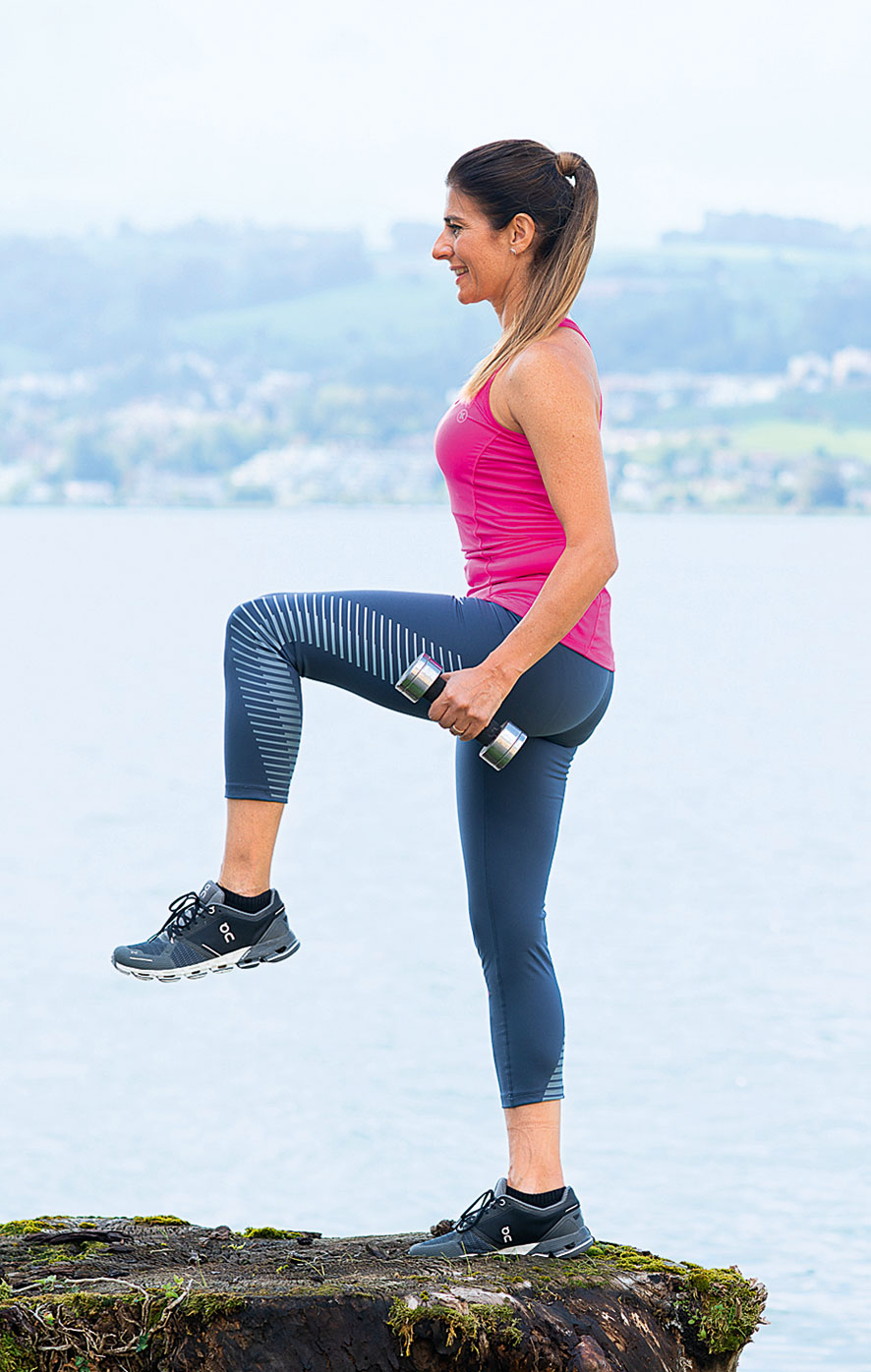
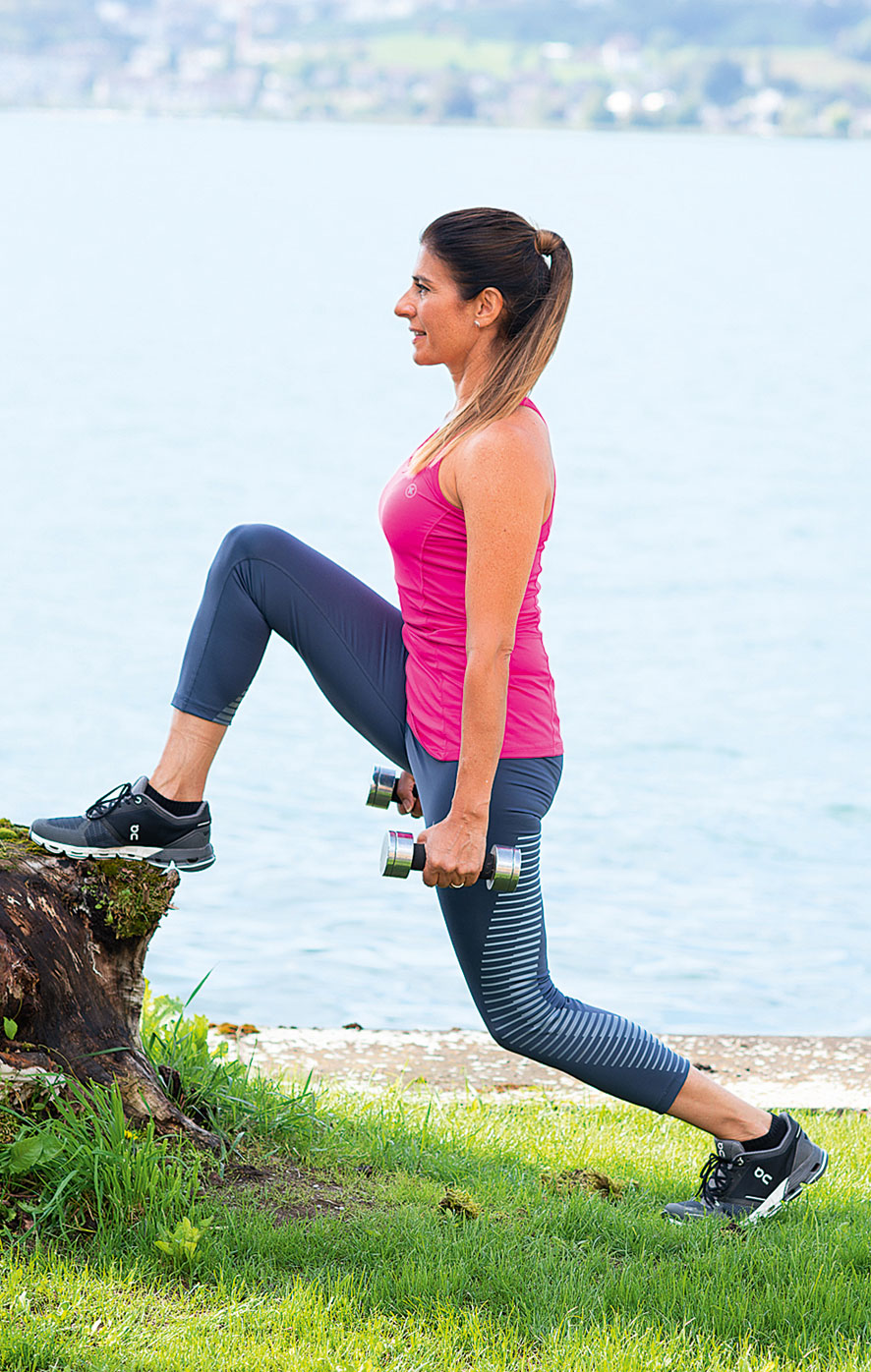
How it works: Put your right leg on the step, your left on the ground. Now lift your left leg forwards until your knee is at hip height or your foot is at knee height. Then bring it back to the starting position.
Focus: Stable alignment of the leg axis and the pelvis on the side of the standing leg.
Dosage: 14 to 16 repetitions, alternating between the left and right side. 2 to 3 sets.
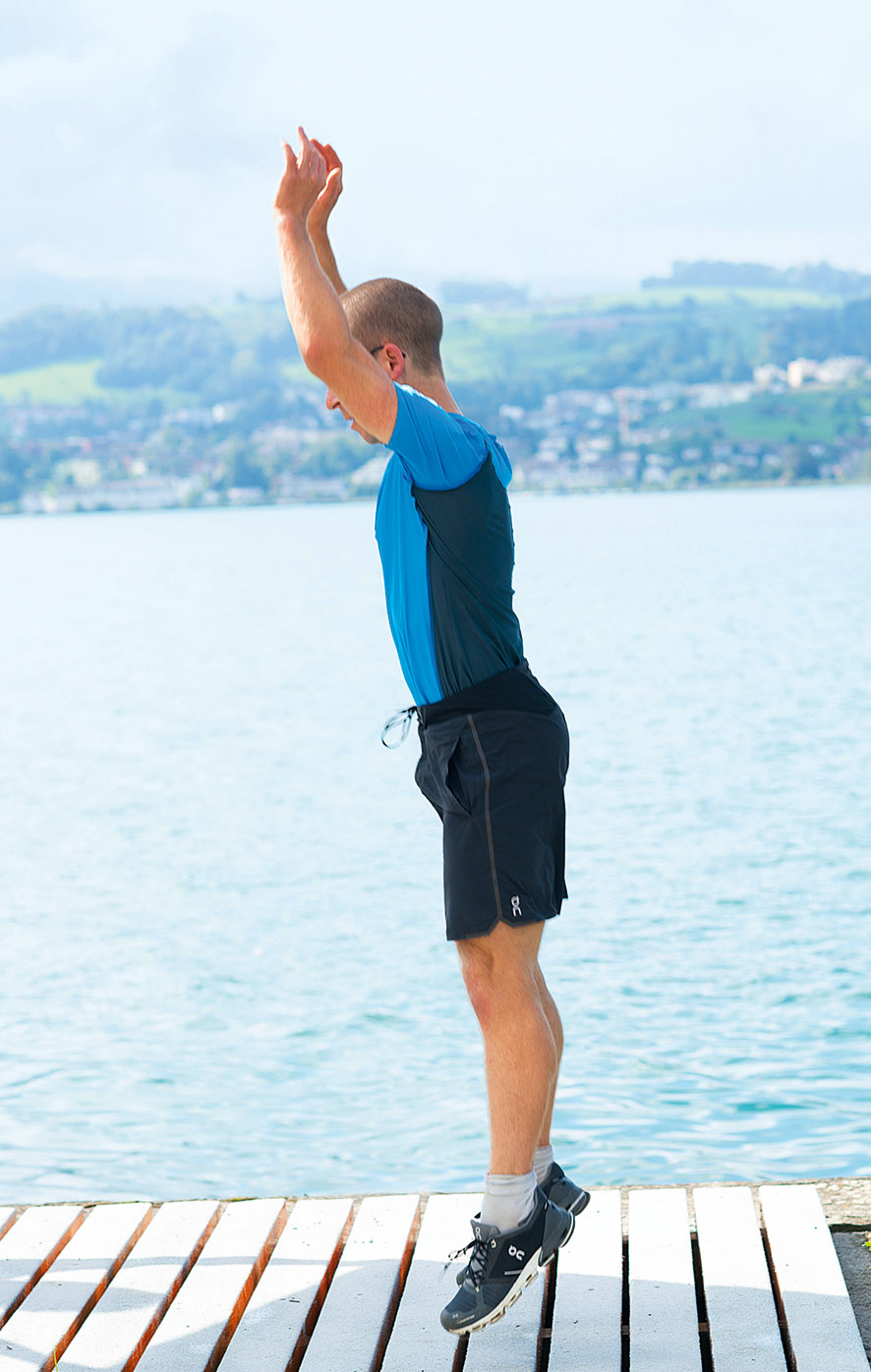
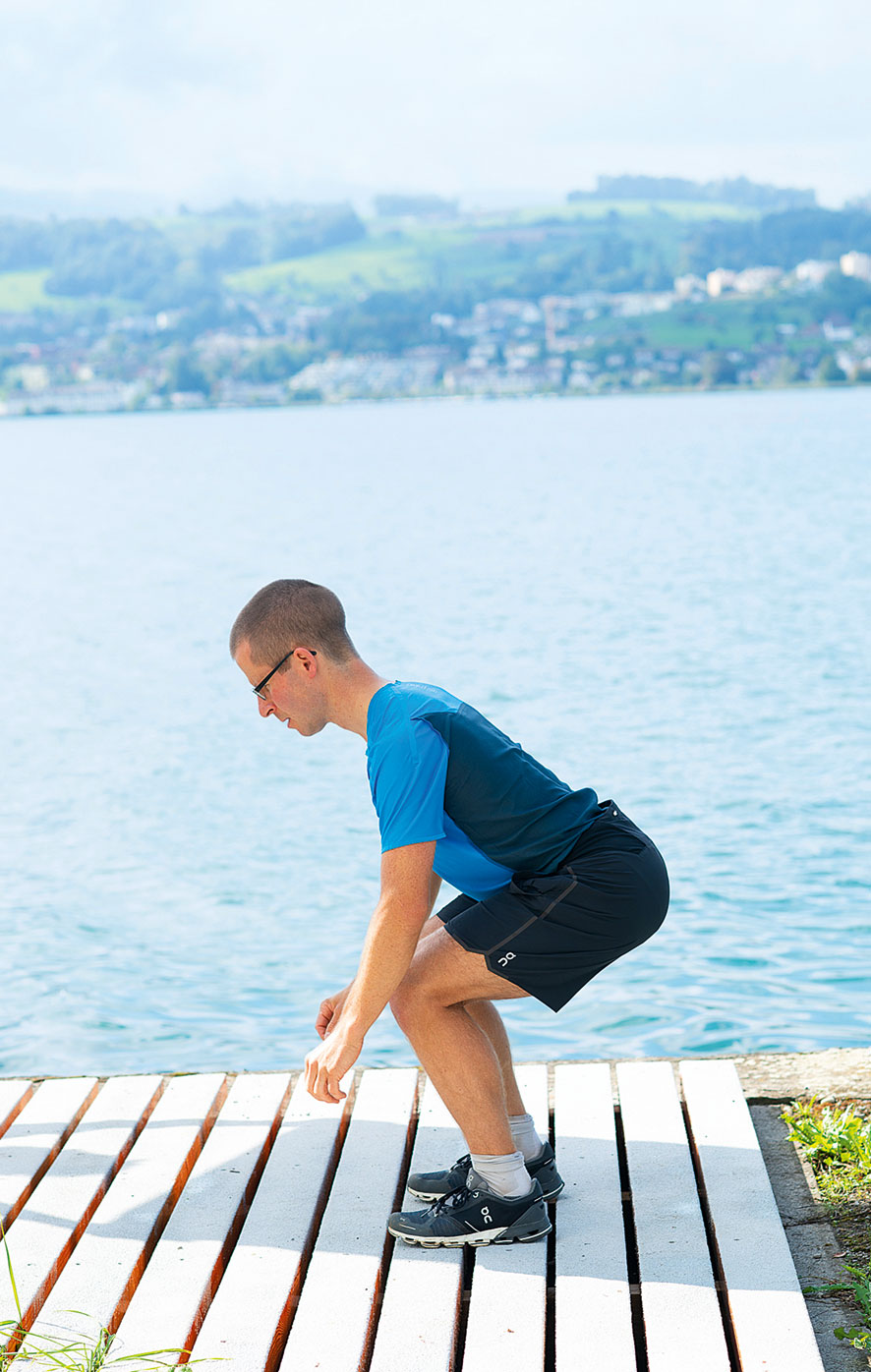
How it works: Jump from the squatting position as high as you can. Similar to a ski jumper. The individual jumps are done in quick succession, but always controlled. Make even the last jump as high as possible!
Focus: Pay attention to your leg axis. At the moment you jump and land, the legs should remain loaded on the axis and the knees should neither drift inwards nor outwards.
Dosage: 3 sets, 10 to 15 repetitions with a break of approximately 1 minute between sets.
How it works: This exercise lasts 8 minutes and consists of eight positions. Two positions are paired – one difficult and one easy variation. The individual exercise is executed until the quality can no longer be maintained. Then the change to the easy version and vice versa takes place.
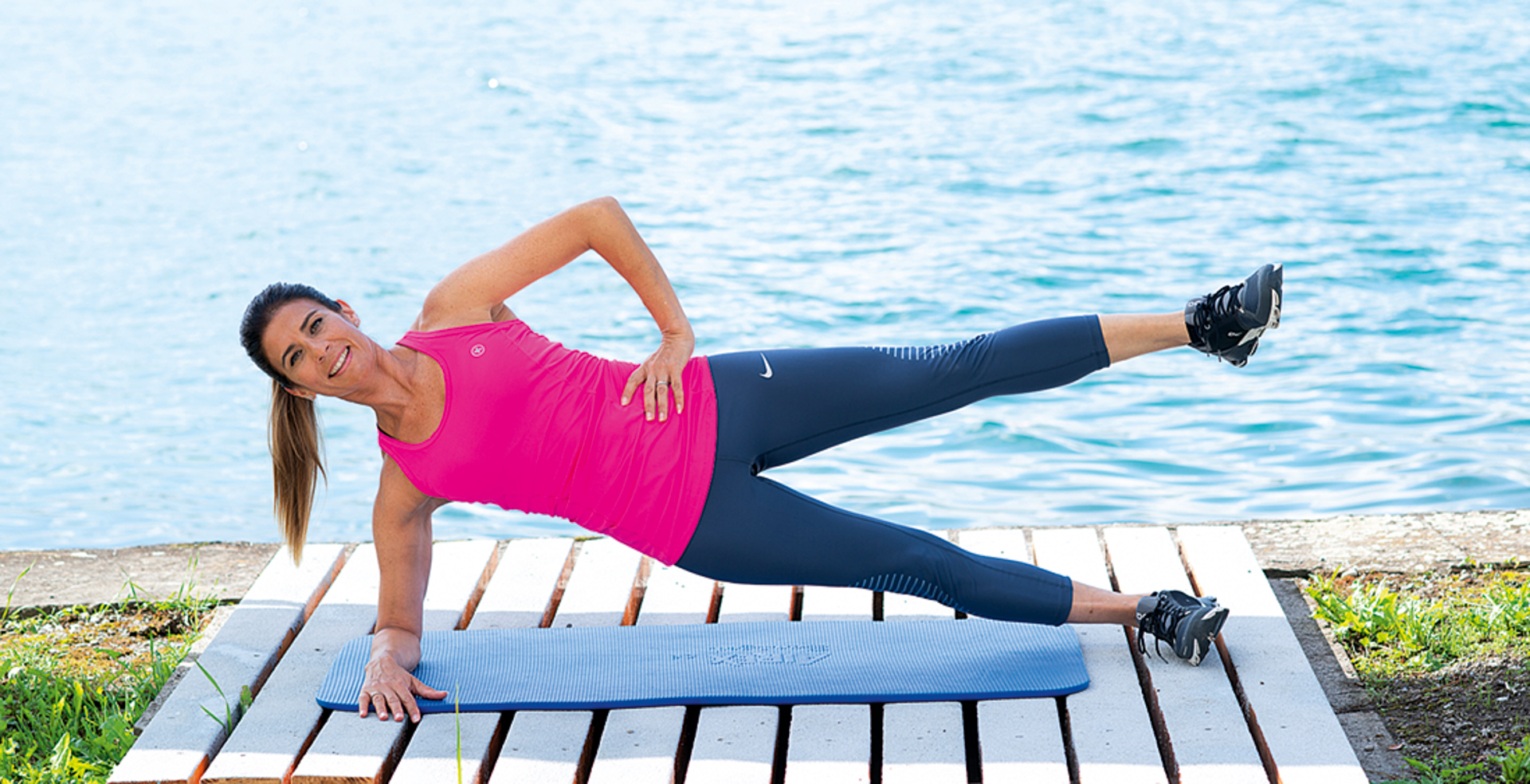
Side plank on the right: Support yourself on your right elbow and the outer edge of your right foot. Your left leg is raised, your left hand resting on your pelvis. Your torso is straight from your heel to the back of your head. As you become tired, switch to the side position.
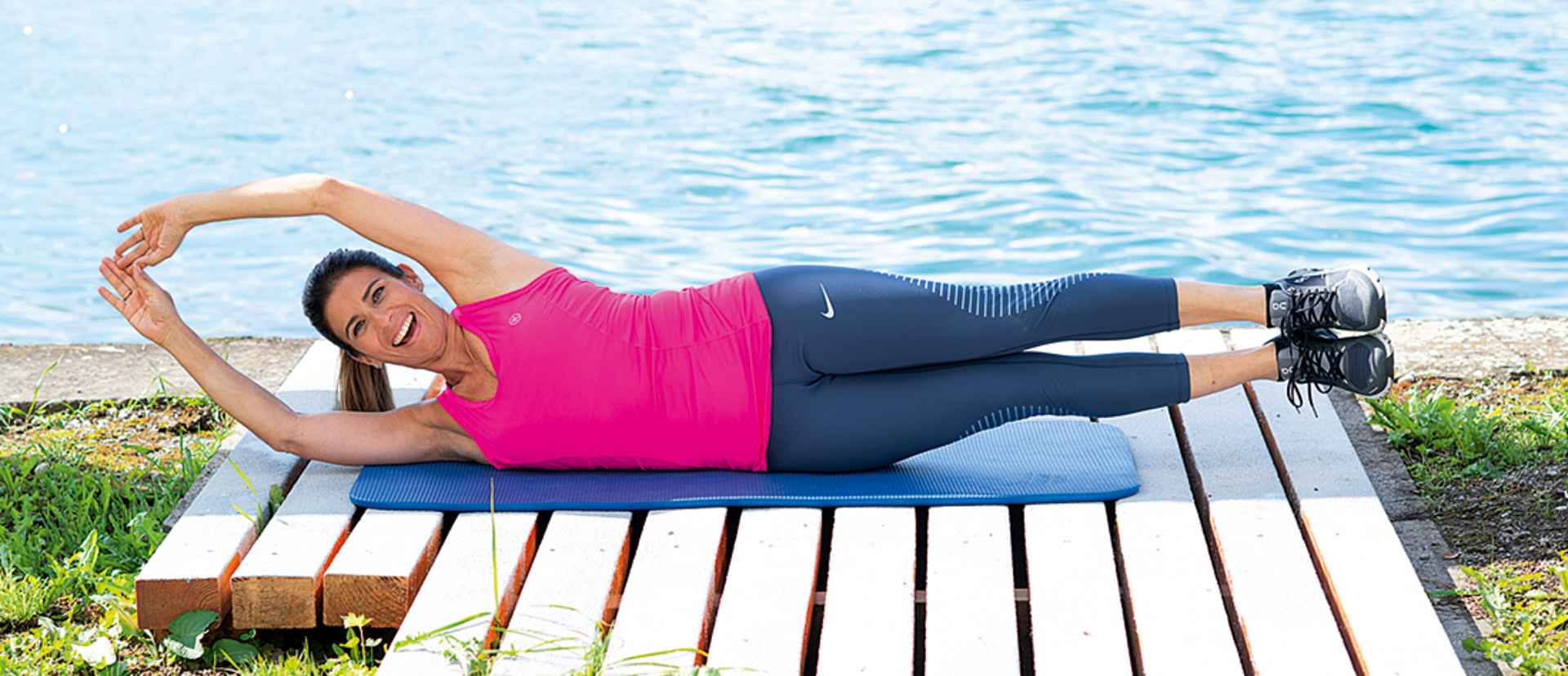
Side position on the right: Lie on the right side of your torso – your arms and legs are raised and, if possible, the shoulders too. When you become tired, switch back to the side plank.
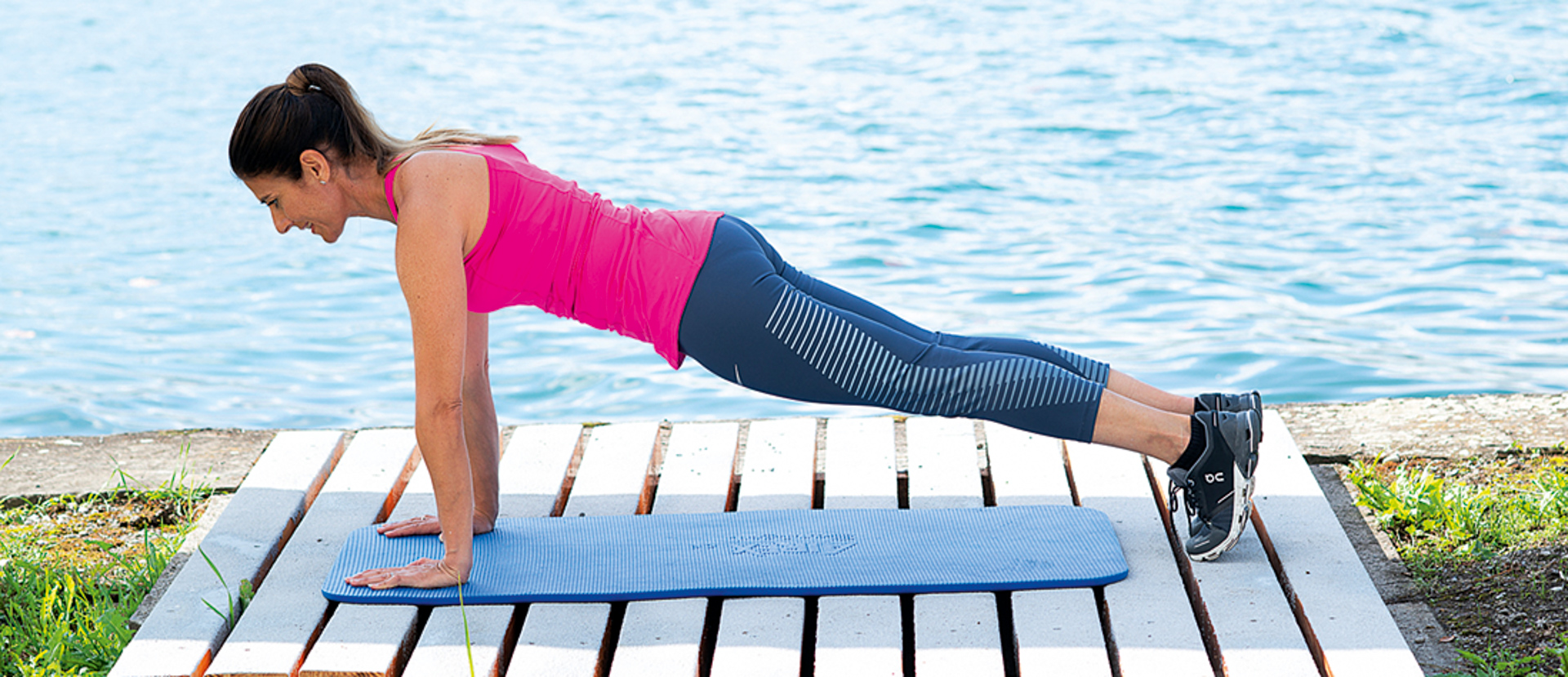
Front plank: Adopt the push-up position. Tauten your pelvic, abdominal and gluteal muscles. Your body is as stiff as a board and aligned from head to heel. If your body begins to tremble and you can no longer properly maintain the starting position, switch to the prone position.
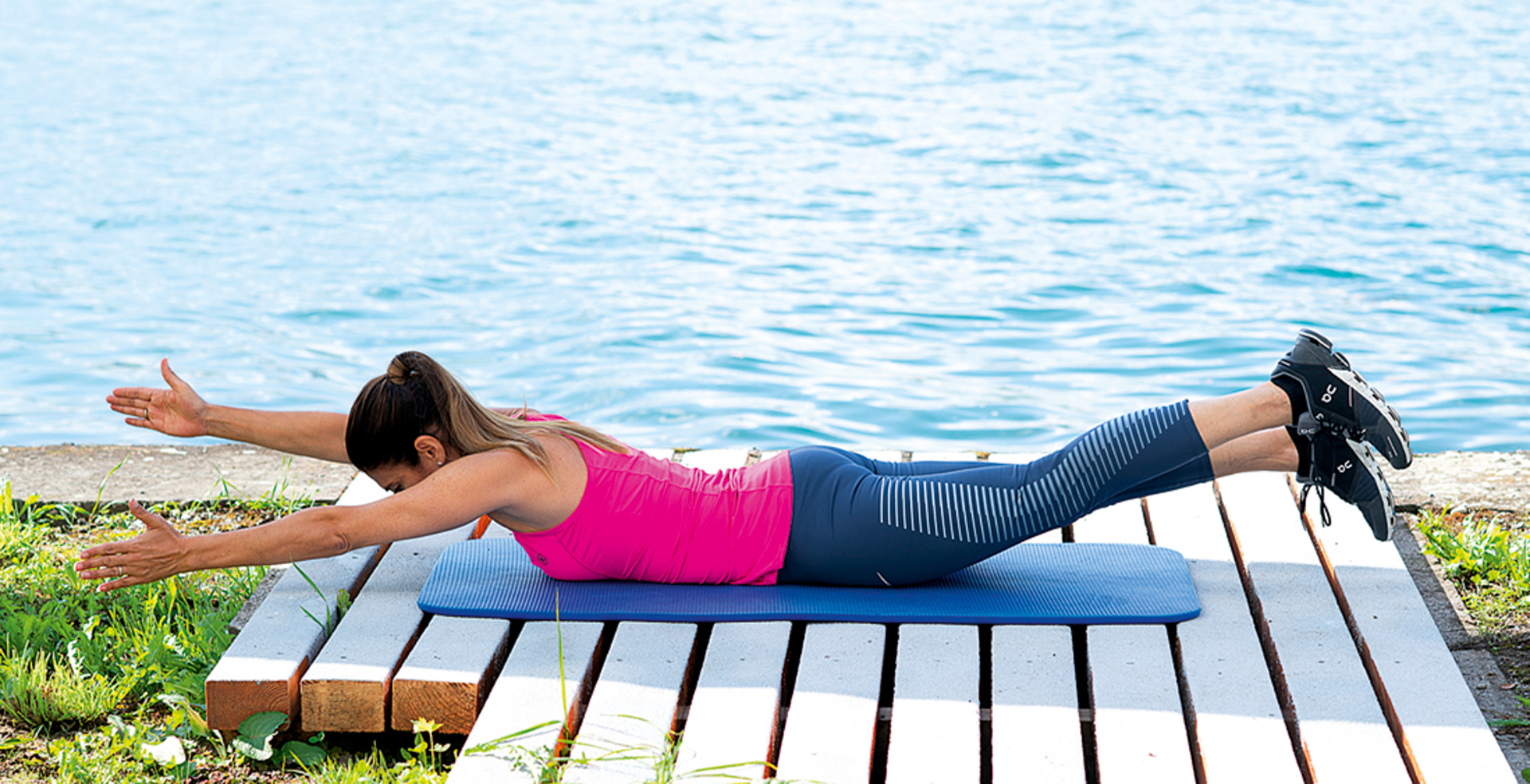
Prone position: Stretch your arms forwards with your thumbs pointing upwards, lift your legs off the ground, flex your feet and extend your heels. Move your arms and legs up and down in opposite directions in small fast movements. When you get tired, return to the front plank.
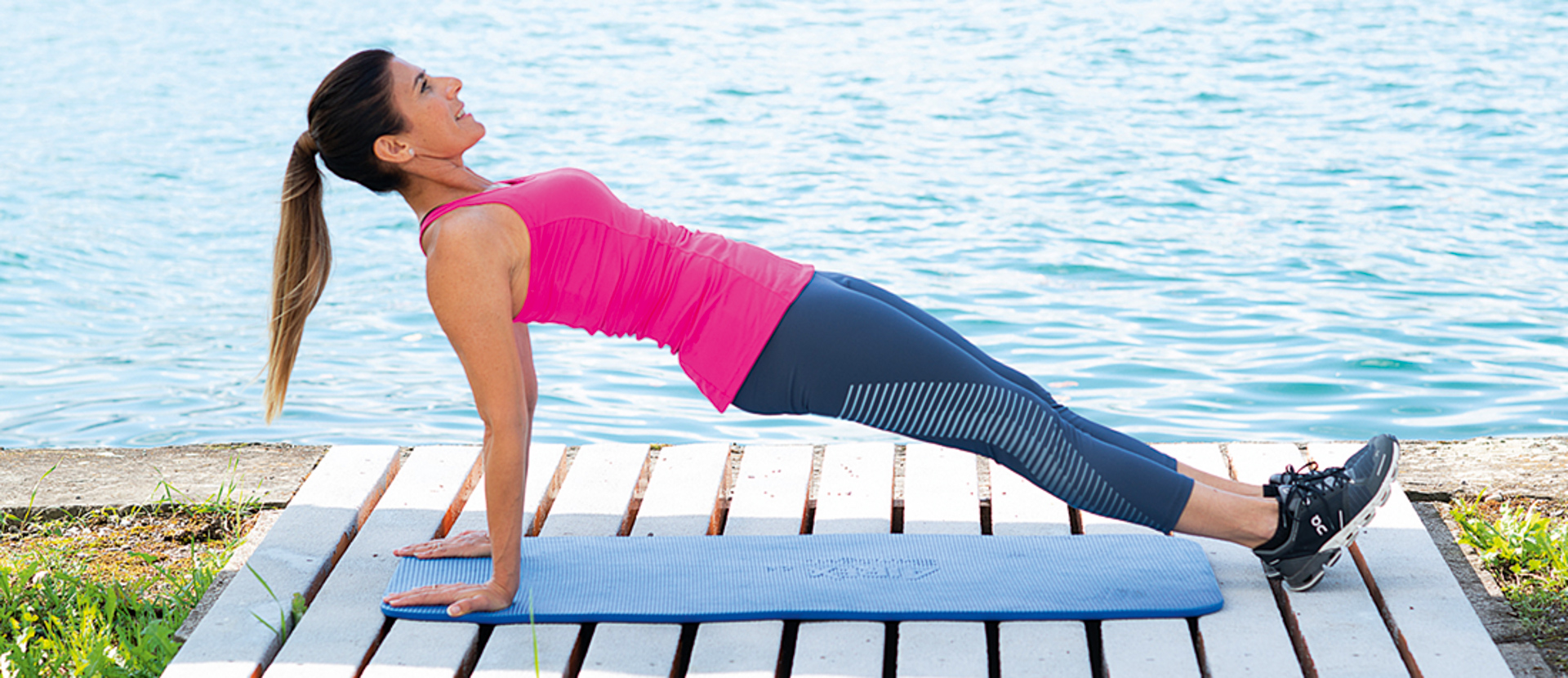
Reverse plank: The torso is similar to a board. The head is slanted forwards. The shoulders are wide and stable – they are not pushed towards your ears. If your back, arms, wrists or shoulders become tired, switch to the flick knife position.
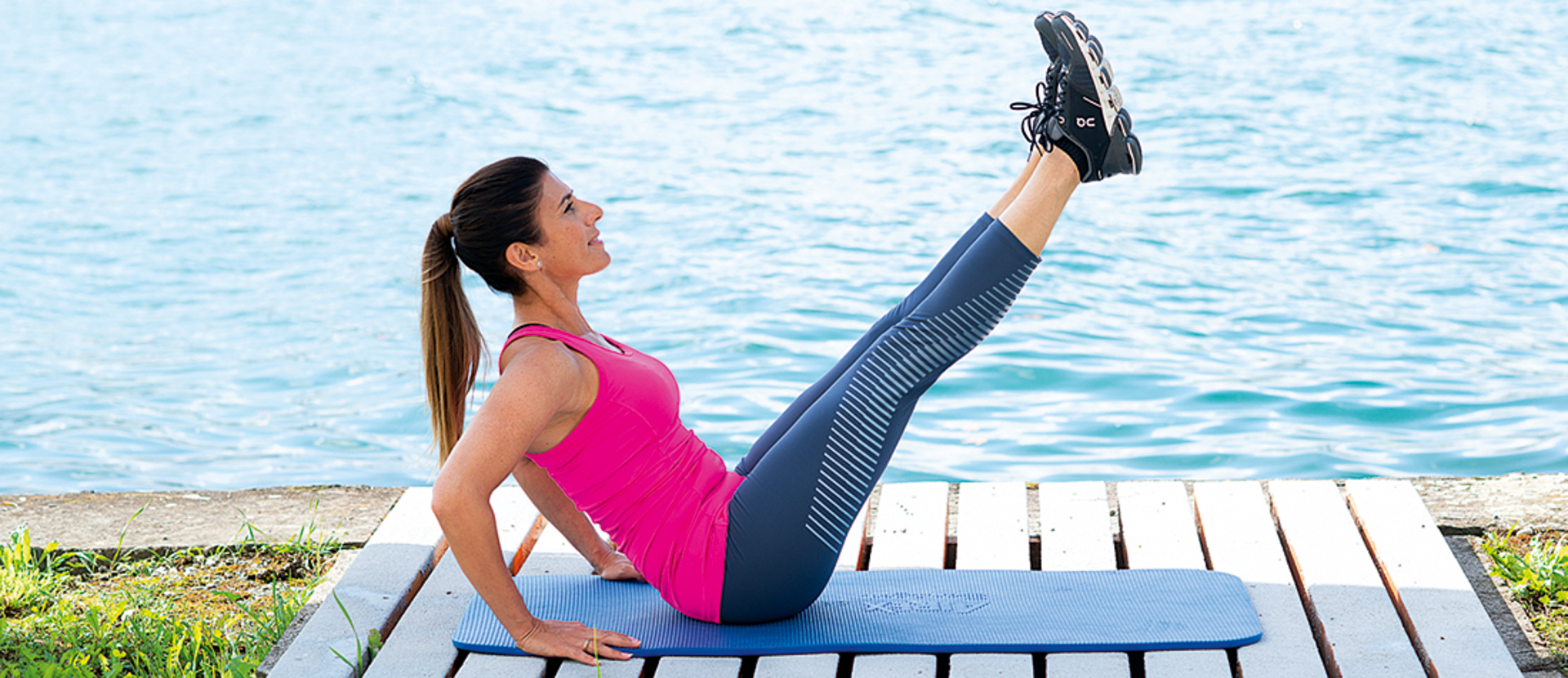
Flick knife: Hold your back as straight as possible, especially your lower back. As you become tired and can no longer keep your back straight, switch back to the reverse plank.
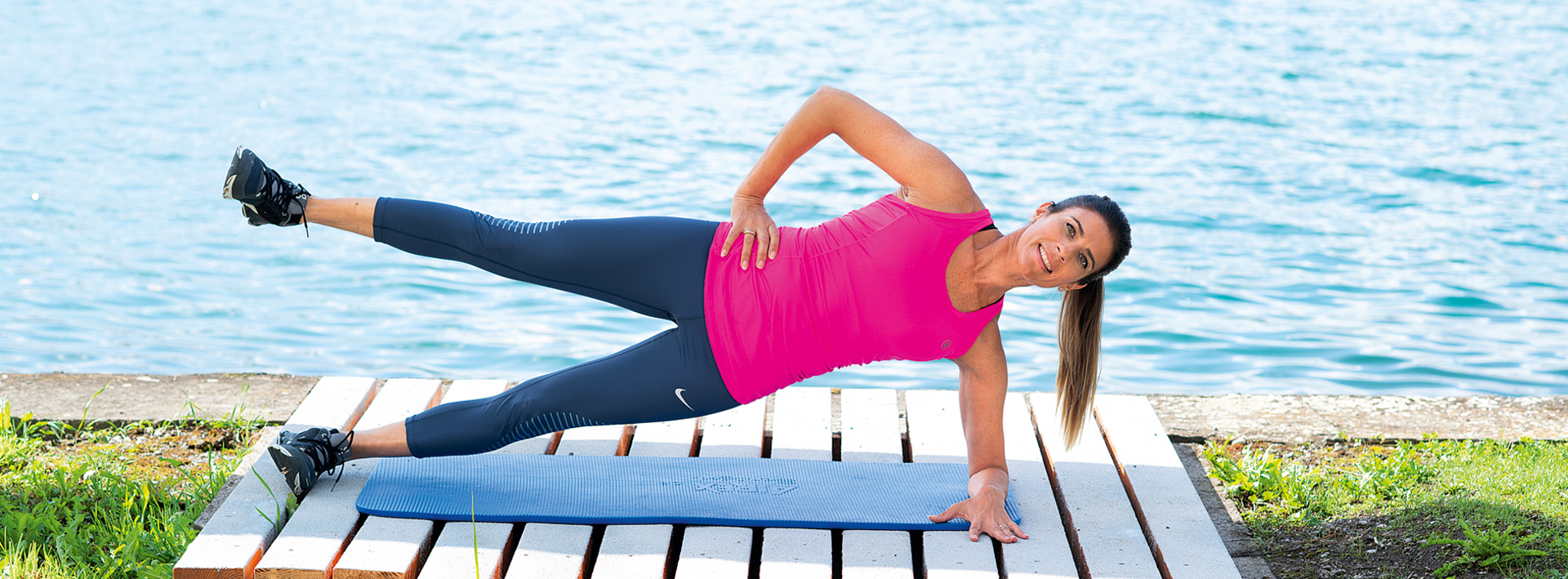
Side plank on the left: see above
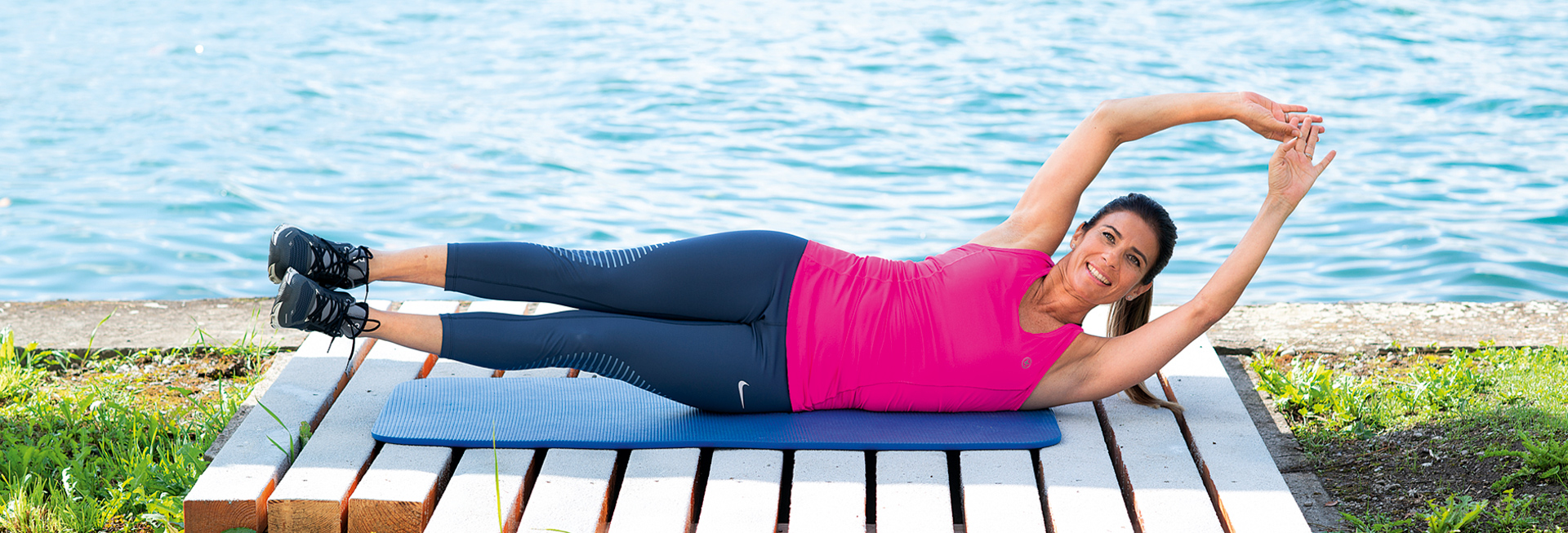
Side position on the left: see above
Focus: A clean movement pattern and seamless change between the positions and exercises.
Dosage: When done together for a total duration of 4 x 2 minutes, the eight positions strengthen the right, left, front and back of your torso.
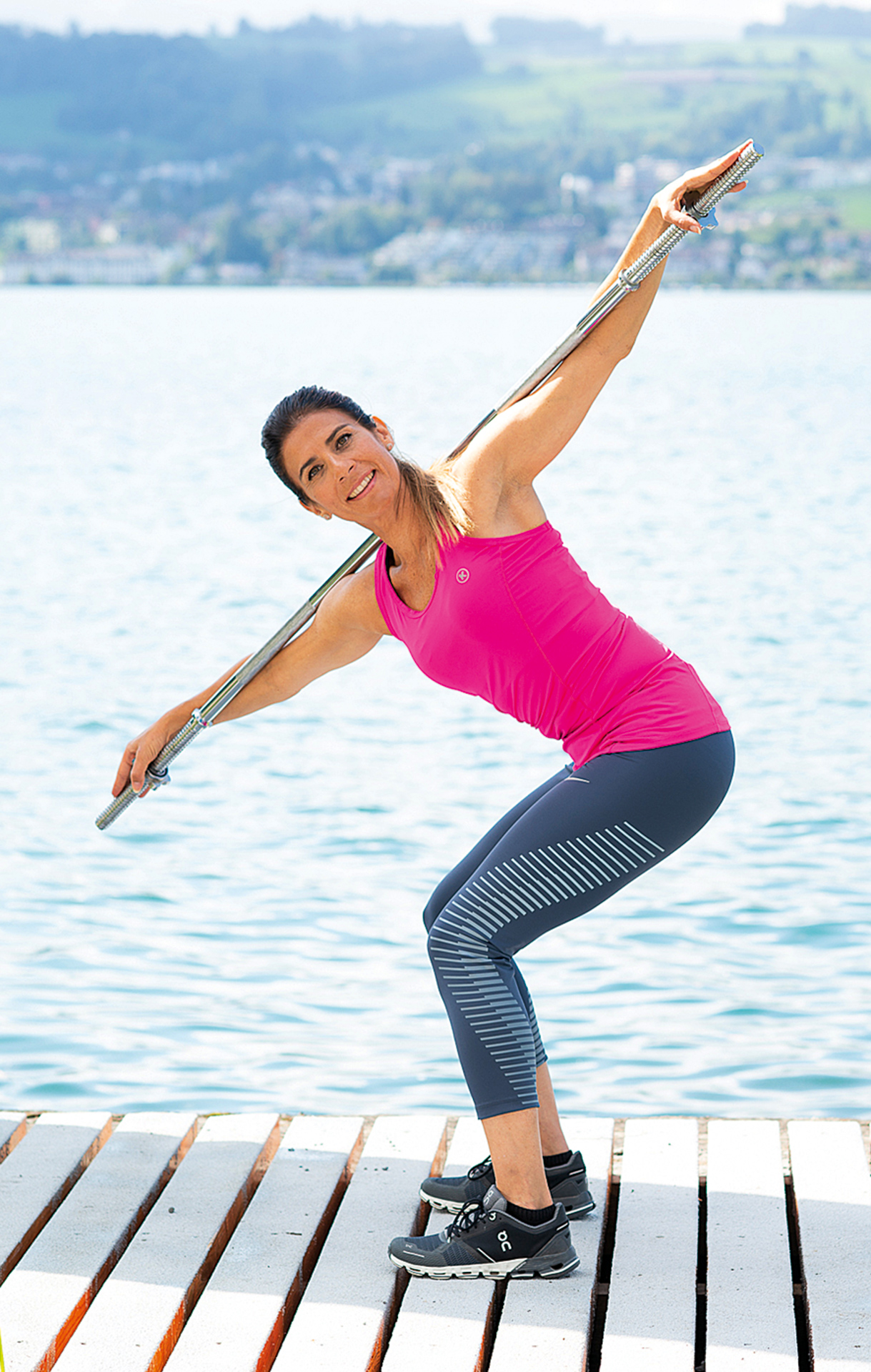
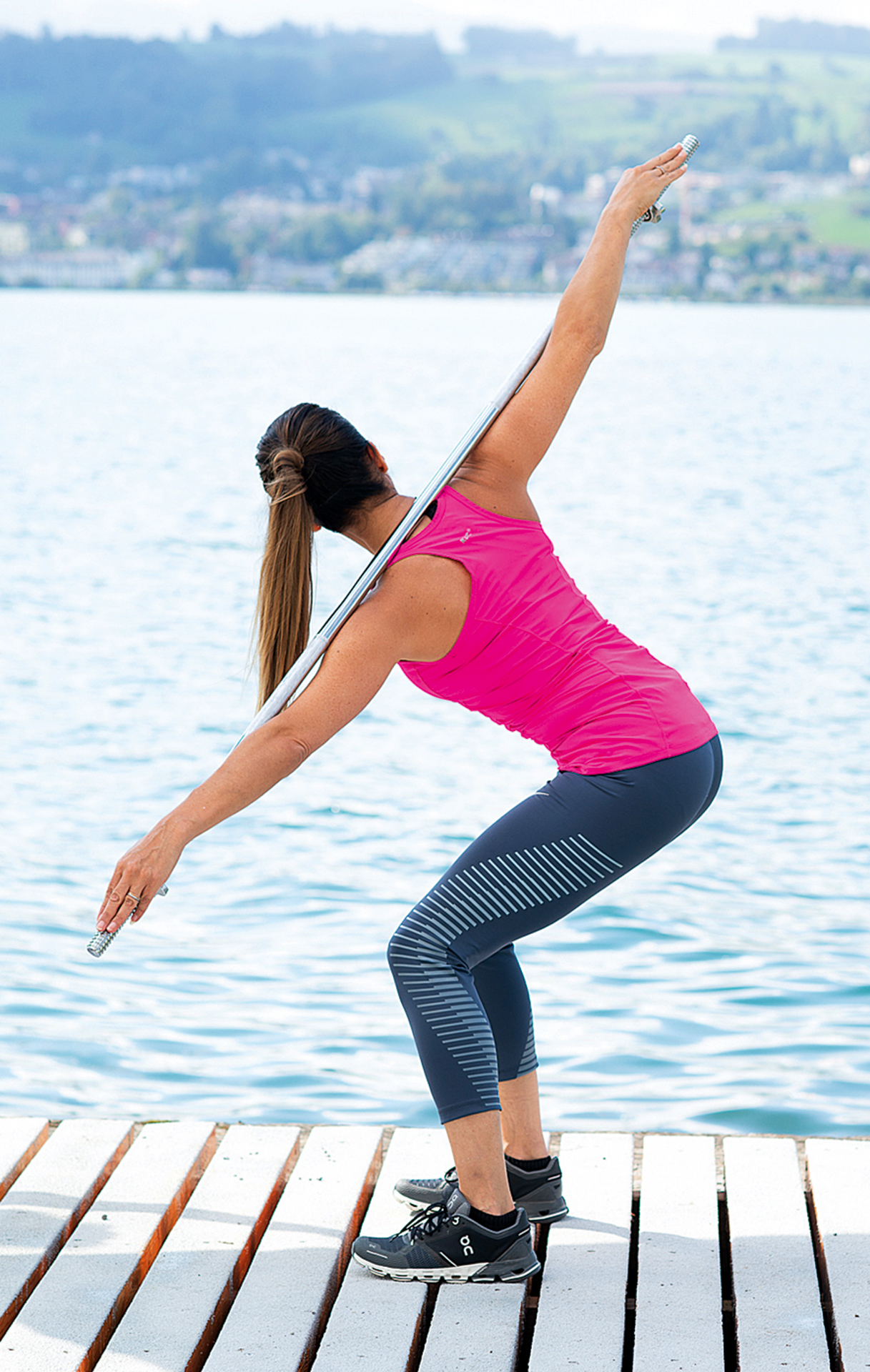
How it works: Stand with your legs hip-width apart, stretch your arms to the side along a rod or broom (later with a 10 kg barbell) and turn your torso to the left and right.
Focus: Move in all possible directions.
Dosage: Start in a calm and controlled manner before you move your upper body fully over both diagonals. Then do 2 to 3 sets, each with 12 diagonal movements.
Take note: This exercise is not so suitable if you have inadequate flexibility in the shoulders and upper body. If you have spinal disc problems in the lumbar spine, you should refrain from doing this exercise completely.
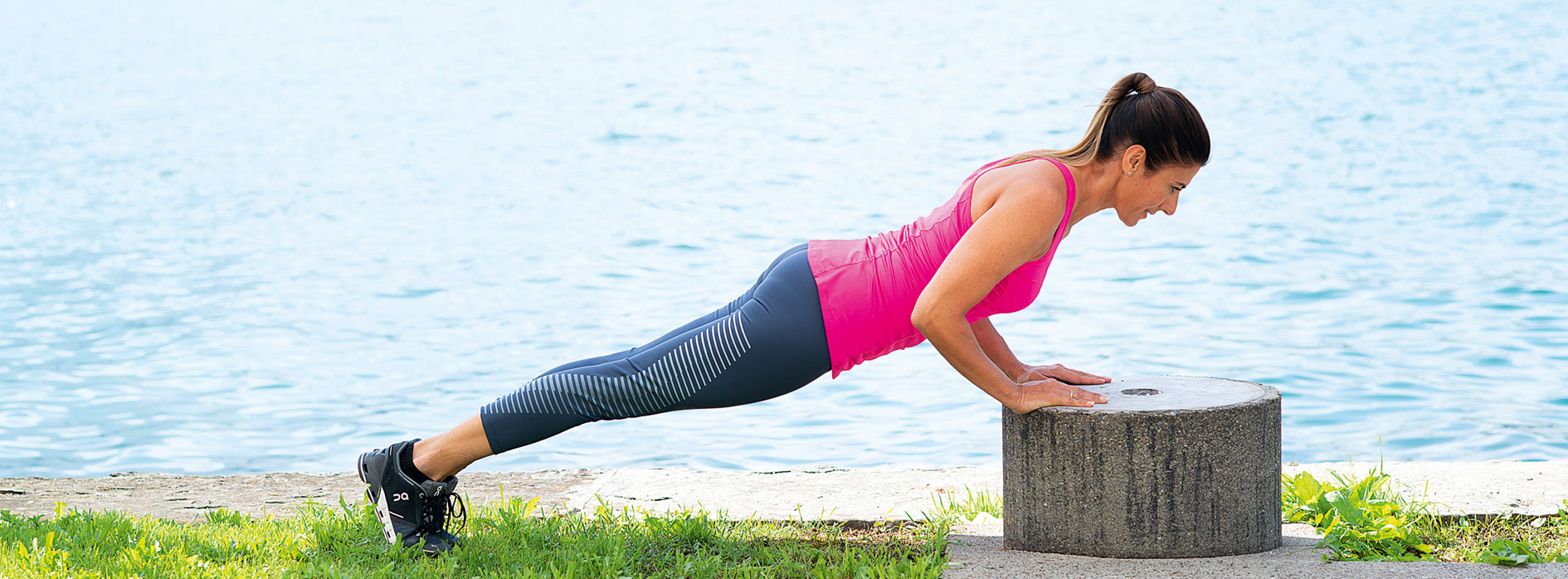
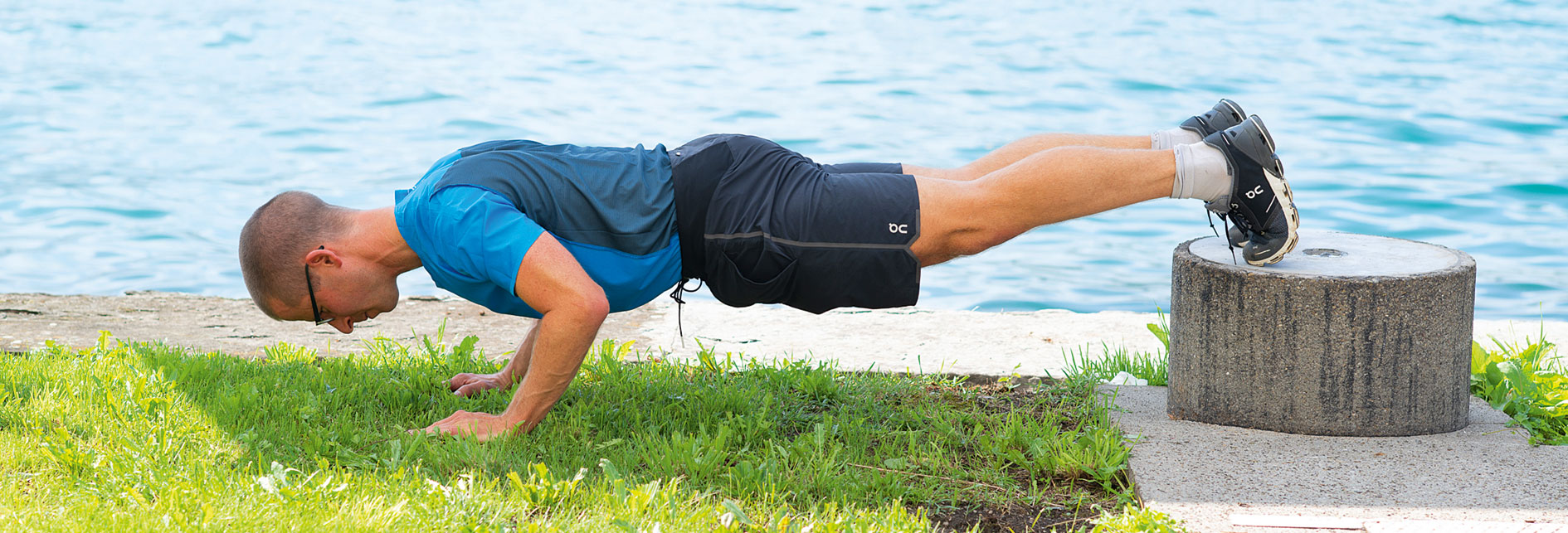
How it works: Touch the ground with your nose. Make sure that your whole body is activated, particularly your legs. Now push yourself up into the push-up position. Beginners should keep their knees on the ground.
Focus: Keep your elbows close to your body and your torso rigid. No hollow back!
Dosage: First do an appraisal: do as many push-ups as possible. Then complete 2 to 3 sets at two-thirds of your maximum performance and repeat the test after 3 to 4 weeks.
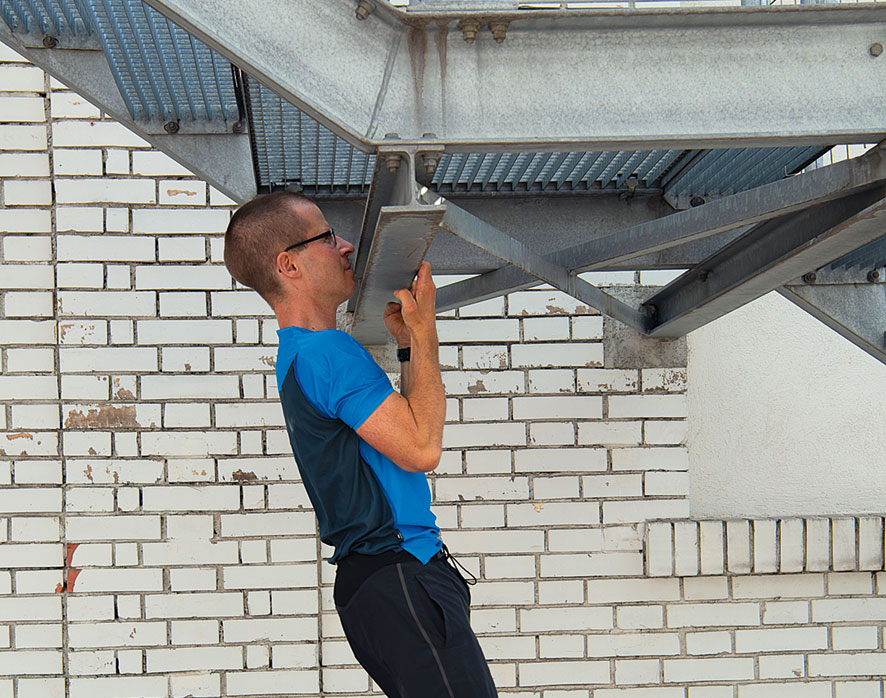
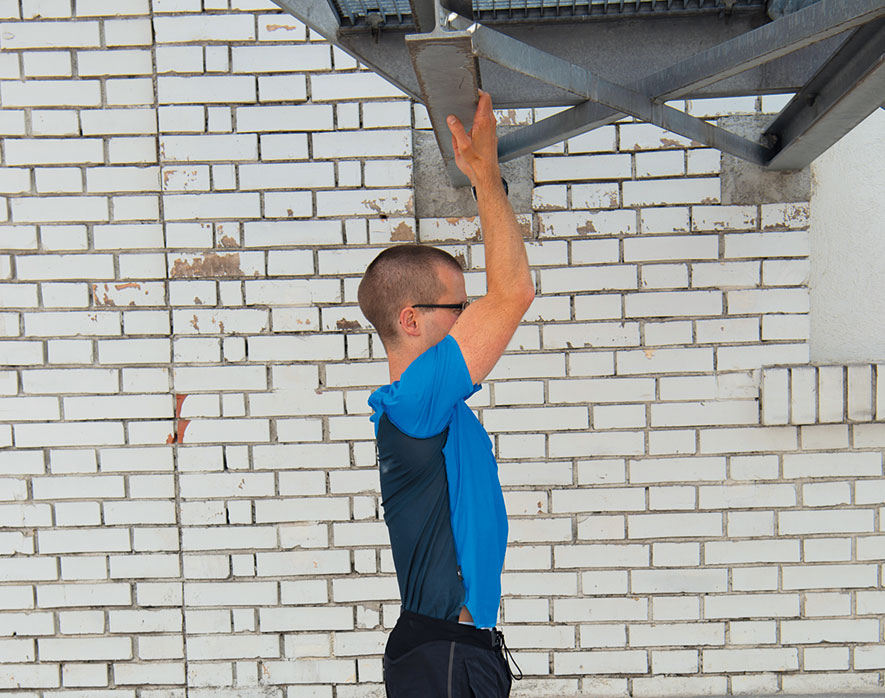
How it works: Pull yourself upwards as far as possible on a pull-up bar or tabletop.
Focus: Keep your neck long
Dosage: 2 to 3 sets at two-thirds of the maximum load.
Periodically we publish an interview with an interesting sports personality. Today with Simona Aebersold, multiple Junior Orienteering World Champion.

Jumping rope is an excellent strength and coordination exercise for runners and promotes reactive strength as well as an active running style.
