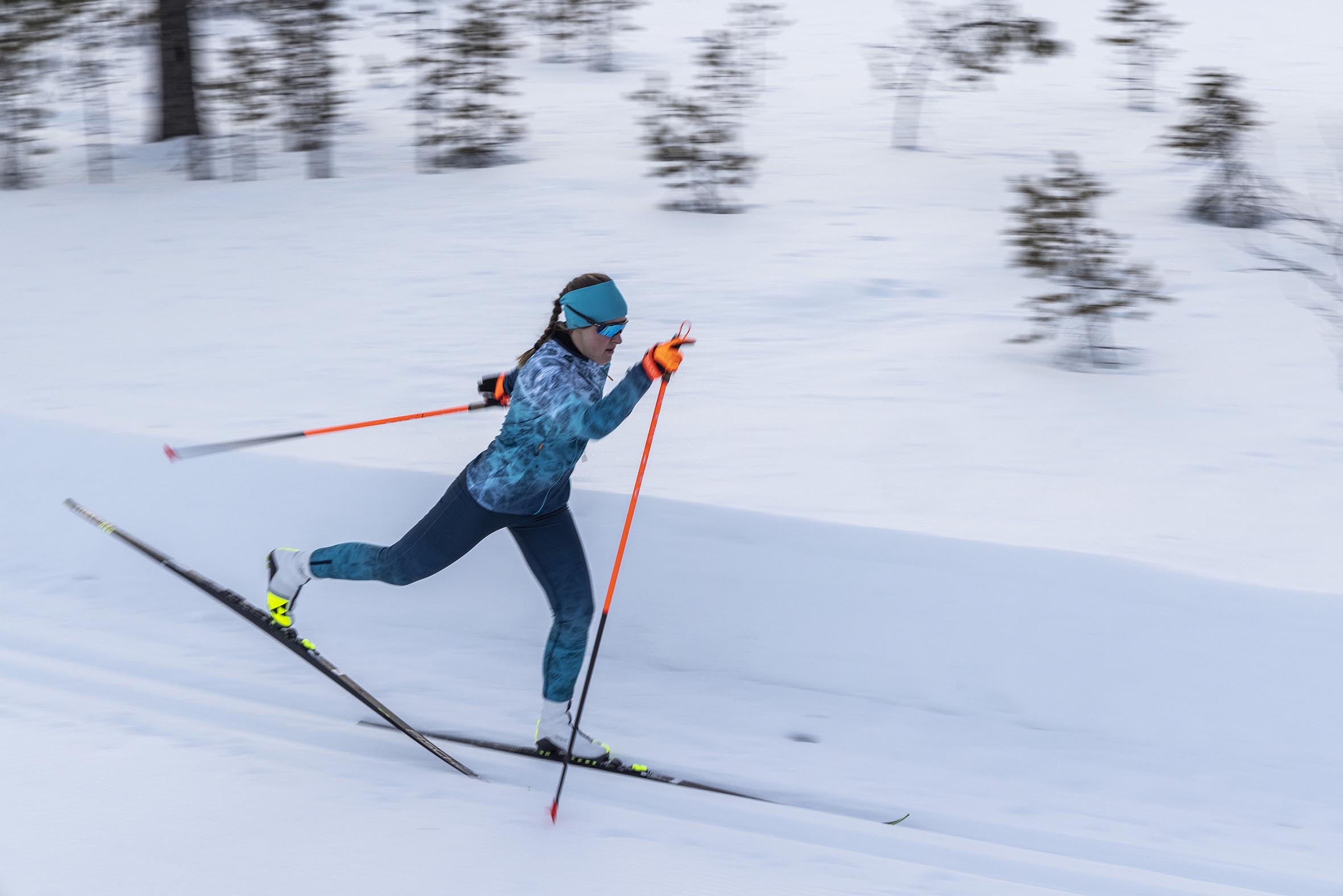
The sport of cross-country skiing consists of two disciplines: skating and classic. Both sports are extremely healthy and yet involve very different styles of movement. Here's what the two styles have to offer.
Foto: Löffler/Matthias Klugsberger
The sport of cross-country skiing consists of two disciplines: skating and classic. Both sports are extremely healthy and yet involve very different styles of movement. Here's what the two styles have to offer.
In Switzerland, skating has overtaken classic as a sport in recent years. This is a pity, as the top athletes are showing. The top cross-country skiers train both techniques equally and benefit optimally from the variety. The reasons for skating dominance: skating is technically easier for beginners, faster – and ultimately crucial for the win for many years – when skating, you do not have to worry about equipment and wax.
However, modern ski skins have removed the need to worry about wax during classic skiing. The only drawback: each cross-country skiing style requires its own equipment and thus means twice the financial investment. However, those who want to get the most of out the sport rely on both techniques (and you can always just rent some skis). Here’s what classic cross-country skiing and skating have to offer:
Classic cross-country skiing
Foto: Fischer Sports GmbH
Physical exertion
Comprehensive muscular exertion of all muscle groups.
The cardiovascular system benefits to the full.
Gentle stress on the musculoskeletal system.
Increased use of the calf muscles and hip extensors (gluteal muscles, knee flexors and extensors).
For double-pole use, hip strength and stability are important.
Equipment
Two basic models: Waxable and waxless skis with climbing aids (ski skins).
For waxable skis, glide and grip wax are used in combination: The glide zones are located at the front and rear, and kick wax is applied in the kick zone.
With waxless skis, there is no need to wax the kick zone. Modern ski skins have replaced textured skis and enable classic skating in practically all snow conditions without tedious waxing.
Basically, classic skis have a longer and higher arc tension than skating skis and are therefore also longer.
Modern skin models have an adjustable binding, which allows the push-off point to be changed depending on the snow conditions. In slow (blunt) conditions, the binding slides backwards, in fast (pointed) conditions it slips forward.
Classic shoes allow the ankle a lot of freedom when it comes to forward movement, but not to the side.
Classic poles are slightly shorter than skating poles (body size (in cm) x 0.83 = classic pole length).
Advantages
Great variety of movements with diagonal step and double pole alternating between both legs and one-legged kick.
Speed can be easily adjusted to fitness level, from comfortable ski touring to uphill speed skiing. As a result, you tire less quickly and long workouts are also possible.
Balance and stability are easier to control on the cross-country ski trail than in skating.
Also suitable for casual skiers on hilly terrain.
Special trails for classic skiers only offer fantastic scenery.
Disadvantages
Slower speed than skating.
Dependency on well-groomed trails.
Beginners may experience back pain due to weak and overloaded core and back muscles.
Skiing technique
Diagonal step (one leg behind, alternating arms at the front): Pole use with every step.
Double pole kick in the track with either both legs or single-leg kick. Or in combination.
Shuffling step on steep climbs: Skis placed diagonally to the slope direction (like skating). One step is followed by a pole insert.
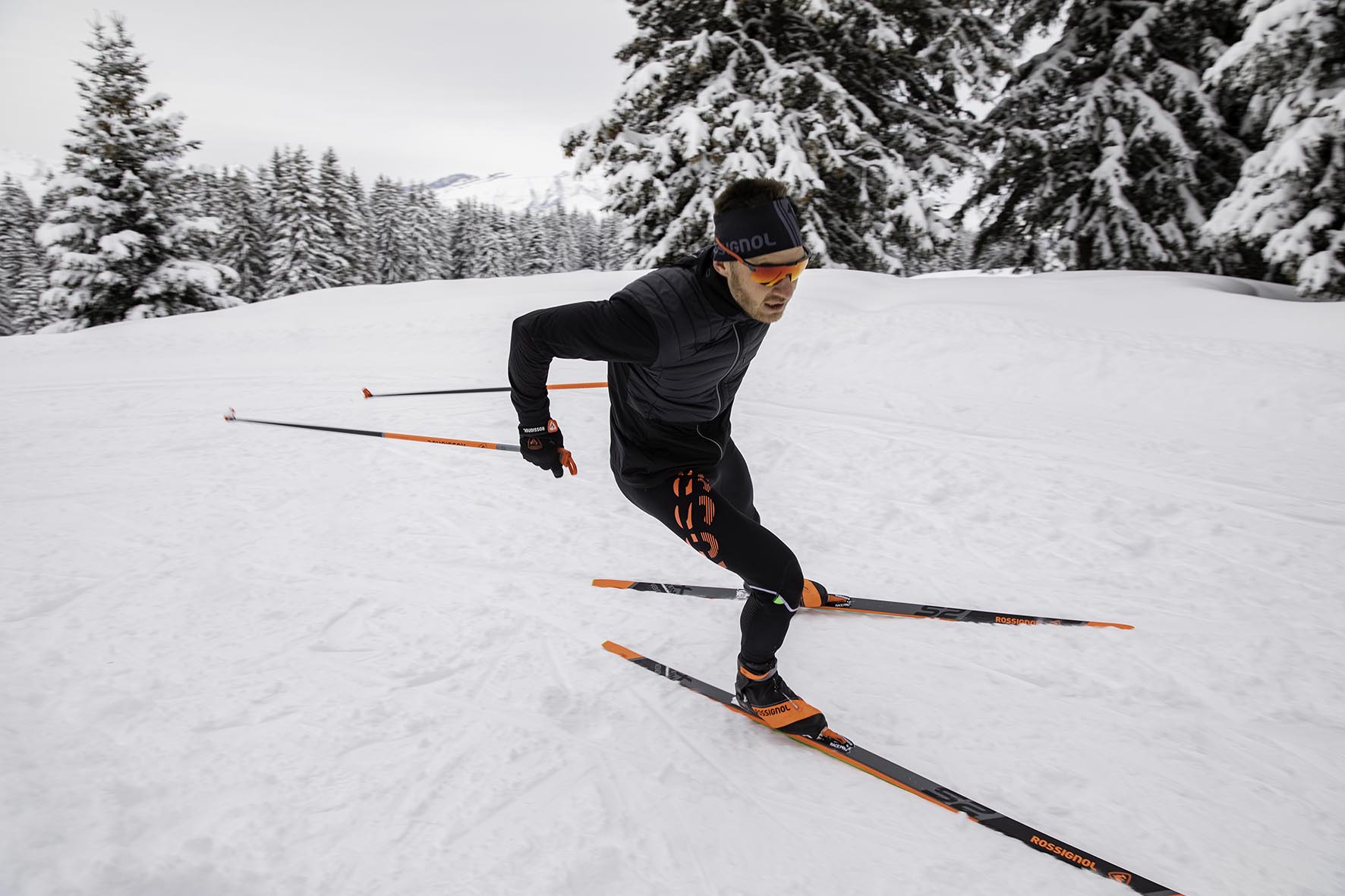
Skating
Foto: Rossignol
Physical exertion
Comprehensive muscular strain of all muscle groups with increased use of the upper body muscles.
Increased stress on the knee joints due to lateral repulsion.
Increased stress on the abductors and adductors (leg spreaders and leg closers).
Good core stability and at the same time hip mobility are required.
Jumping and speed also important for racing.
Equipment
A little shorter than classic skis and with a rounded tip at the front so that they do not get stuck in the snow.
Skating shoes are cut higher and offer a lot of stability on the sides.
The skating binding provides good guidance and lateral stability for a powerful kick.
Skating poles are extremely lightweight, stable and longer than classic poles (body size (in cm) x 0.89 = skating pole length).
Advantages
Equipment very easy to handle (hop on skis and start skating).
Only gliding wax is required (now also available as a spray). Easy preparation and follow-up.
Basic technique easy to learn.
Fast. High speeds can be achieved with relatively little effort, especially in flat areas.
Disadvantages
Depending on the nature of the surface, balance is not easy, particularly downhill (risk of falling).
Less well-trained skaters will quickly enter the red zone on the smallest inclines (risk of overstraining). Therefore, only shorter sessions are possible at the beginning.
Beginners often experience back pain due to weak and overloaded core and back muscles.
Skiing technique
1:2 symmetrical. Most common step style with one pole insert on every second step and symmetrical arm guidance. Ideal for flat or slightly sloping terrain.
1:2 asymmetric. One arm is the guide arm, which extends further forward. If you are skating on steep or sloping terrain, the guide arm is on the slope side.
1:1. Each skate step is followed by a double-pole push-off. Tough. High arm strength and cadence required (commonly used on flat and slightly ascending terrain to increase speed).
Double-pole push-off on the track (as with classic skiing).
Das könnte Sie interessieren
Training tips
Skate faster: 5 one-hour training sessions
As with all endurance sports, basic training is also important for cross-country skiing. However, you'll only get faster by skating really fast from time to time. 5 one-hour speed training sessions for skating enthusiasts.
Training tips
On your skins, get set, go!
A multitude of skin skis allow easy classic cross-country skiing without the need for wax. The key points.
Interviews
Interview with Sebastian Stalder
Sebastian Stalder caused a sensation last winter with several top ten placings and raised hopes for the home World Championships from 12 to 23 February 2025.
Classic or skating? Ideally both!
The sport of cross-country skiing consists of two disciplines: skating and classic. Both sports are extremely healthy and yet involve very different styles of movement. Here's what the two styles have to offer.
Foto: Löffler/Matthias Klugsberger
The sport of cross-country skiing consists of two disciplines: skating and classic. Both sports are extremely healthy and yet involve very different styles of movement. Here's what the two styles have to offer.
In Switzerland, skating has overtaken classic as a sport in recent years. This is a pity, as the top athletes are showing. The top cross-country skiers train both techniques equally and benefit optimally from the variety. The reasons for skating dominance: skating is technically easier for beginners, faster – and ultimately crucial for the win for many years – when skating, you do not have to worry about equipment and wax.
However, modern ski skins have removed the need to worry about wax during classic skiing. The only drawback: each cross-country skiing style requires its own equipment and thus means twice the financial investment. However, those who want to get the most of out the sport rely on both techniques (and you can always just rent some skis). Here’s what classic cross-country skiing and skating have to offer:
Classic cross-country skiing
Foto: Fischer Sports GmbH
Physical exertion
Comprehensive muscular exertion of all muscle groups.
The cardiovascular system benefits to the full.
Gentle stress on the musculoskeletal system.
Increased use of the calf muscles and hip extensors (gluteal muscles, knee flexors and extensors).
For double-pole use, hip strength and stability are important.
Equipment
Two basic models: Waxable and waxless skis with climbing aids (ski skins).
For waxable skis, glide and grip wax are used in combination: The glide zones are located at the front and rear, and kick wax is applied in the kick zone.
With waxless skis, there is no need to wax the kick zone. Modern ski skins have replaced textured skis and enable classic skating in practically all snow conditions without tedious waxing.
Basically, classic skis have a longer and higher arc tension than skating skis and are therefore also longer.
Modern skin models have an adjustable binding, which allows the push-off point to be changed depending on the snow conditions. In slow (blunt) conditions, the binding slides backwards, in fast (pointed) conditions it slips forward.
Classic shoes allow the ankle a lot of freedom when it comes to forward movement, but not to the side.
Classic poles are slightly shorter than skating poles (body size (in cm) x 0.83 = classic pole length).
Advantages
Great variety of movements with diagonal step and double pole alternating between both legs and one-legged kick.
Speed can be easily adjusted to fitness level, from comfortable ski touring to uphill speed skiing. As a result, you tire less quickly and long workouts are also possible.
Balance and stability are easier to control on the cross-country ski trail than in skating.
Also suitable for casual skiers on hilly terrain.
Special trails for classic skiers only offer fantastic scenery.
Disadvantages
Slower speed than skating.
Dependency on well-groomed trails.
Beginners may experience back pain due to weak and overloaded core and back muscles.
Skiing technique
Diagonal step (one leg behind, alternating arms at the front): Pole use with every step.
Double pole kick in the track with either both legs or single-leg kick. Or in combination.
Shuffling step on steep climbs: Skis placed diagonally to the slope direction (like skating). One step is followed by a pole insert.
Skating
Foto: Rossignol
Physical exertion
Comprehensive muscular strain of all muscle groups with increased use of the upper body muscles.
Increased stress on the knee joints due to lateral repulsion.
Increased stress on the abductors and adductors (leg spreaders and leg closers).
Good core stability and at the same time hip mobility are required.
Jumping and speed also important for racing.
Equipment
A little shorter than classic skis and with a rounded tip at the front so that they do not get stuck in the snow.
Skating shoes are cut higher and offer a lot of stability on the sides.
The skating binding provides good guidance and lateral stability for a powerful kick.
Skating poles are extremely lightweight, stable and longer than classic poles (body size (in cm) x 0.89 = skating pole length).
Advantages
Equipment very easy to handle (hop on skis and start skating).
Only gliding wax is required (now also available as a spray). Easy preparation and follow-up.
Basic technique easy to learn.
Fast. High speeds can be achieved with relatively little effort, especially in flat areas.
Disadvantages
Depending on the nature of the surface, balance is not easy, particularly downhill (risk of falling).
Less well-trained skaters will quickly enter the red zone on the smallest inclines (risk of overstraining). Therefore, only shorter sessions are possible at the beginning.
Beginners often experience back pain due to weak and overloaded core and back muscles.
Skiing technique
1:2 symmetrical. Most common step style with one pole insert on every second step and symmetrical arm guidance. Ideal for flat or slightly sloping terrain.
1:2 asymmetric. One arm is the guide arm, which extends further forward. If you are skating on steep or sloping terrain, the guide arm is on the slope side.
1:1. Each skate step is followed by a double-pole push-off. Tough. High arm strength and cadence required (commonly used on flat and slightly ascending terrain to increase speed).
Double-pole push-off on the track (as with classic skiing).
Das könnte Sie interessieren
Training tips
Skate faster: 5 one-hour training sessions
As with all endurance sports, basic training is also important for cross-country skiing. However, you'll only get faster by skating really fast from time to time. 5 one-hour speed training sessions for skating enthusiasts.
Training tips
On your skins, get set, go!
A multitude of skin skis allow easy classic cross-country skiing without the need for wax. The key points.
Interviews
Interview with Sebastian Stalder
Sebastian Stalder caused a sensation last winter with several top ten placings and raised hopes for the home World Championships from 12 to 23 February 2025.